Nearly 7% of the Population Has Limitations in Daily Life as a Result of a Mental, Intellectual, or Cognitive Disorder
Espagnacq M., Regaert C. (IRDES)
Questions d'économie de la santé (Issues in Health Economics) n° 294 - Novembre 2024
ABSTRACT
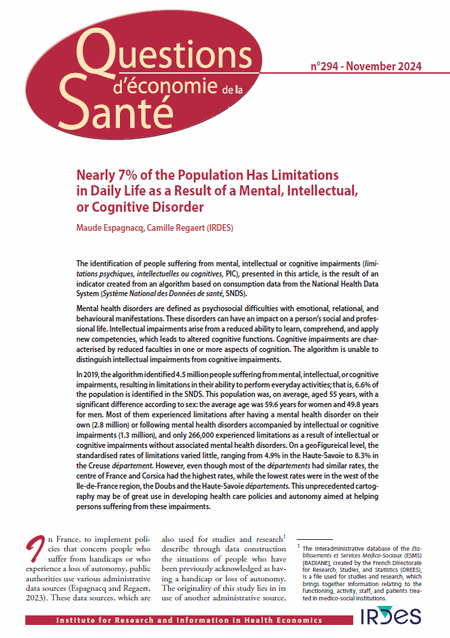
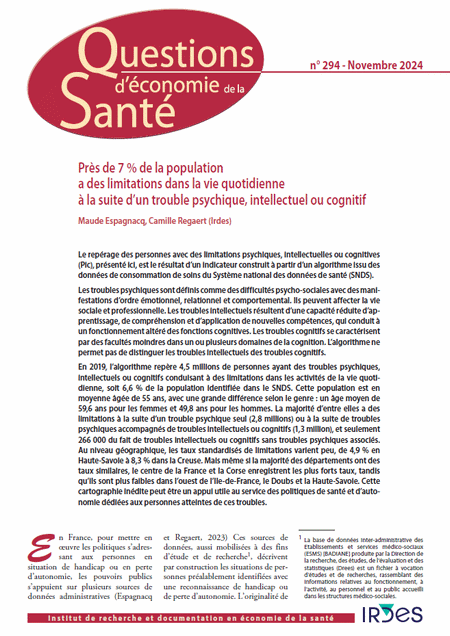
The identification of people suffering from mental, intellectual or cognitive impairments (limitations psychiques, intellectuelles ou cognitives, PIC), presented in this article, is the result of an indicator created from an algorithm based on consumption data from the National Health Data System (Système National des Données de santé, SNDS). Mental health disorders are defined as psychosocial difficulties with emotional, relational, and behavioural manifestations. These disorders can have an impact on a person’s social and professional life. Intellectual impairments arise from a reduced ability to learn, comprehend, and apply new competencies, which leads to altered cognitive functions. Cognitive impairments are characterised by reduced faculties in one or more aspects of cognition. The algorithm is unable to distinguish intellectual impairments from cognitive impairments. In 2019, the algorithm identified 4.5 million people suffering from mental, intellectual, or cognitive impairments, resulting in limitations in their ability to perform everyday activities; that is, 6.6% of the population is identified in the SNDS. This population was, on average, aged 55 years, with a significant difference according to sex: the average age was 59.6 years for women and 49.8 years for men. Most of them experienced limitations after having a mental health disorder on their own (2.8 million) or following mental health disorders accompanied by intellectual or cognitive impairments (1.3 million), and only 266,000 experienced limitations as a result of intellectual or cognitive impairments without associated mental health disorders. On a geoFigureical level, the standardised rates of limitations varied little, ranging from 4.9% in the Haute-Savoie to 8.3% in the Creuse département. However, even though most of the départements had similar rates, the centre of France and Corsica had the highest rates, while the lowest rates were in the west of the Ile-de-France region, the Doubs and the Haute-Savoie départements. This unprecedented cartography may be of great use in developing health care policies and autonomy aimed at helping persons suffering from these impairments.
See also Questions d'économie de la santé n° 294 in French: Près de 7 % de la population a des limitations dans la vie quotidienne à la suite d'un trouble psychique, intellectuel ou cognitif.